A large construction site is one of the hardest places to run technology. There is rarely permanent power, the layout changes every few weeks, dust and heat punish equipment, and the people who most need connectivity — site managers, engineers, security teams — are spread across acres of moving work fronts. This guide covers two things that solve most of those problems together: site-wide Wi-Fi connectivity and relocatable solar-powered CCTV trolleys.
- Why construction sites are difficult for connectivity
- Wi-Fi options: wireless bridges, mesh, and cellular backup
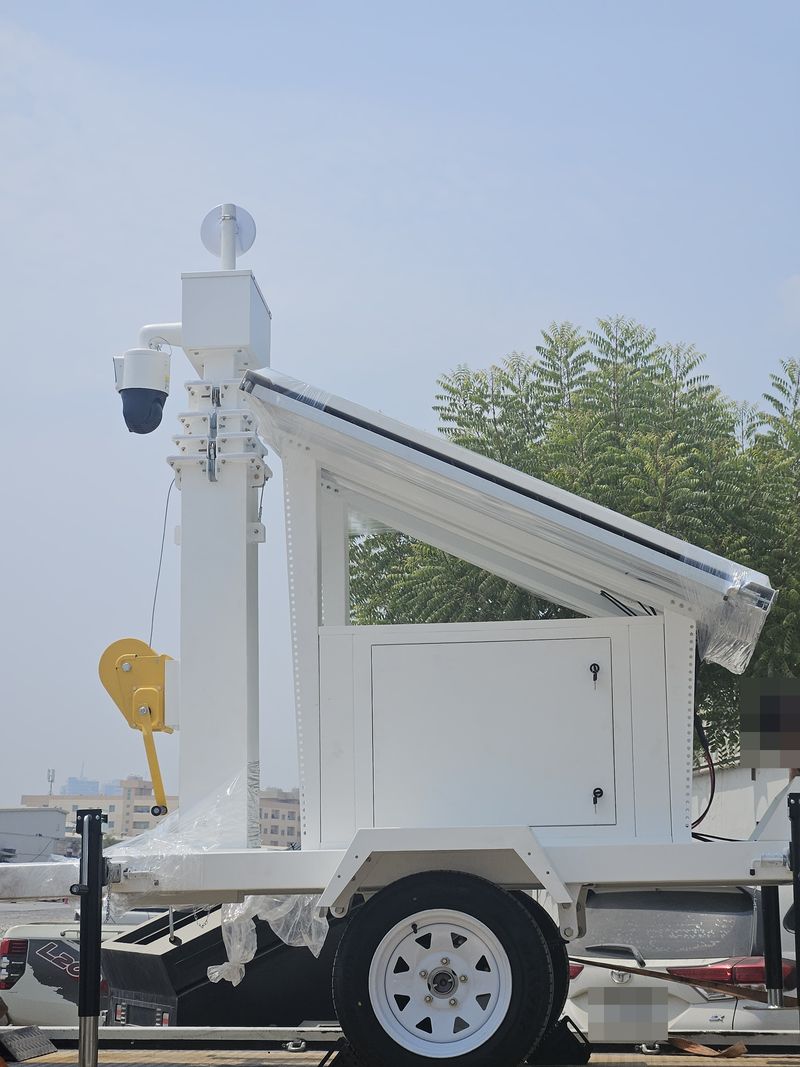
- What a solar CCTV trolley actually is
- How to size and place mobile cameras
- Why the two work best as one system
Why Construction Sites Are Hard to Connect
- No fixed infrastructure: Permanent cabling and power are usually not installed until late in the project.
- Constantly changing layout: Structures rise, block signal paths, and work areas shift as phases progress.
- Harsh UAE conditions: High temperatures, dust, and humidity shorten the life of standard indoor-grade equipment.
- Large, open footprints: A single access point cannot cover a site with multiple towers, yards, and material areas.
- Theft and safety risk: Materials, tools, and machinery are attractive targets, and safety events need to be documented.
Building Reliable Site-Wide Wi-Fi
The goal is not just "Wi-Fi everywhere" — it is a dependable network that survives the site changing around it. A typical approach layers a few technologies:
1. A Wireless Backbone (Point-to-Point Links)
High-capacity point-to-point wireless bridges connect the site office to key locations — a tower crane, a far corner, a second gate — without trenching cable. They need line of sight and stable mounting, so they are usually placed on masts, cabin roofs, or existing structures that will not move for the duration of the project.
2. Distribution Access Points
From the backbone, weatherproof outdoor access points provide local Wi-Fi coverage where people actually work — site offices, welfare areas, laydown yards, and active floors. Placement is planned around the structures that will exist, not just what exists on day one.
3. Cellular (4G/5G) Backup
A cellular router provides a second internet path if the primary line drops, and is often the main uplink for remote work fronts that are too far for a wired connection.
4. Rugged, Weather-Rated Hardware
Use outdoor-rated equipment with appropriate ingress protection (dust and water sealing), suitable operating temperature range for UAE summers, and surge protection on mast-mounted gear. All wireless equipment should be type-approved for use in the UAE.
What Is a Solar CCTV Trolley?
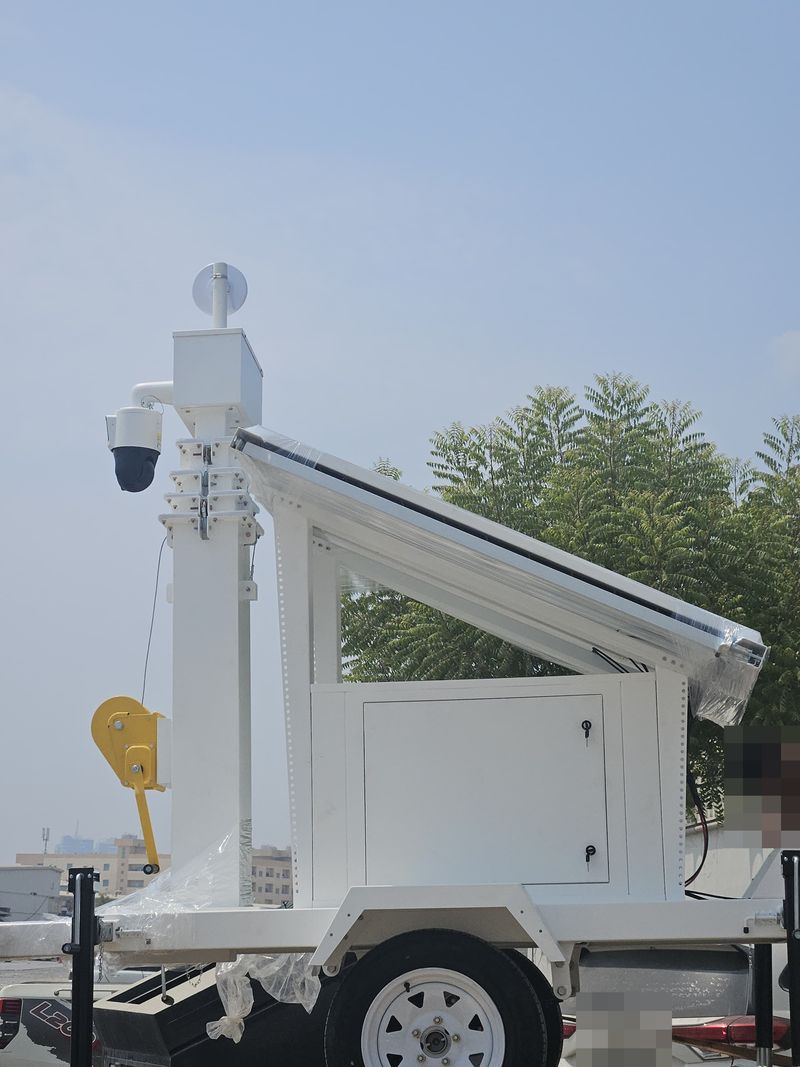
A solar CCTV trolley is a self-contained, wheeled camera unit. It typically combines:
- A mast carrying one or more cameras (often PTZ for wide-area coverage)
- Solar panels and a battery bank in a lockable cabinet
- A wireless uplink — Wi-Fi bridge to the site network, or a 4G/5G router
- Local recording as a backup if the network link is interrupted
- Optional deterrents such as strobe lights and a speaker for remote talk-down
Because it brings its own power and connectivity, it needs no cabling and no mains supply — you position it, level it, and it is live.
Fixed Cameras vs. Solar Trolley Cameras
| Factor | Fixed Wired CCTV | Solar Trolley CCTV |
|---|---|---|
| Power | Needs mains or generator feed | Self-powered by solar and battery |
| Cabling | Requires trenching or cable runs | None — wireless uplink |
| Flexibility | Fixed once installed | Relocated as work areas change |
| Setup time | Slower — civil and cabling work | Fast — position and commission |
| Best for | Permanent gates, site offices, stores | Changing work fronts, excavation, perimeters |
Where Solar Trolley Cameras Work Best
- Perimeter and boundary gaps where fencing is incomplete
- Material entry and exit points to log deliveries and vehicles
- Excavation and foundation phases before permanent power exists
- Crane and lifting zones for safety documentation
- Out-of-hours protection of high-value stores and equipment yards
Design Points That Make or Break a Solar System
- Power budget: Add up the camera, wireless gear, and any lighting, then size the panels and battery for night operation plus reserve for dusty or overcast days.
- Dust management: Panels lose output when dusty — plan for periodic cleaning.
- Heat-rated components: Batteries and electronics should be rated for UAE summer temperatures and housed with adequate ventilation.
- Anti-theft measures: Lockable cabinets, secured wheels or ground anchors, and tamper alerts protect the unit itself.
- Wireless link quality: A trolley is only as good as its uplink — confirm signal strength at the intended position before committing to a location.
Why Wi-Fi and Solar Trolleys Work Best Together
A site-wide wireless network gives mobile cameras somewhere to connect, and mobile cameras give the network a reason to extend to every work front. With both in place, security video, site-office systems, attendance devices, and engineers' tablets can share one managed network — monitored from a single control point, with local recording as a safety net.
Planning connectivity or security for a construction site?
Rightway Solution can survey your site, design the wireless network, and recommend the right mix of fixed and mobile solar CCTV — with a free, no-obligation site survey and quote.
Get Your Free Quote